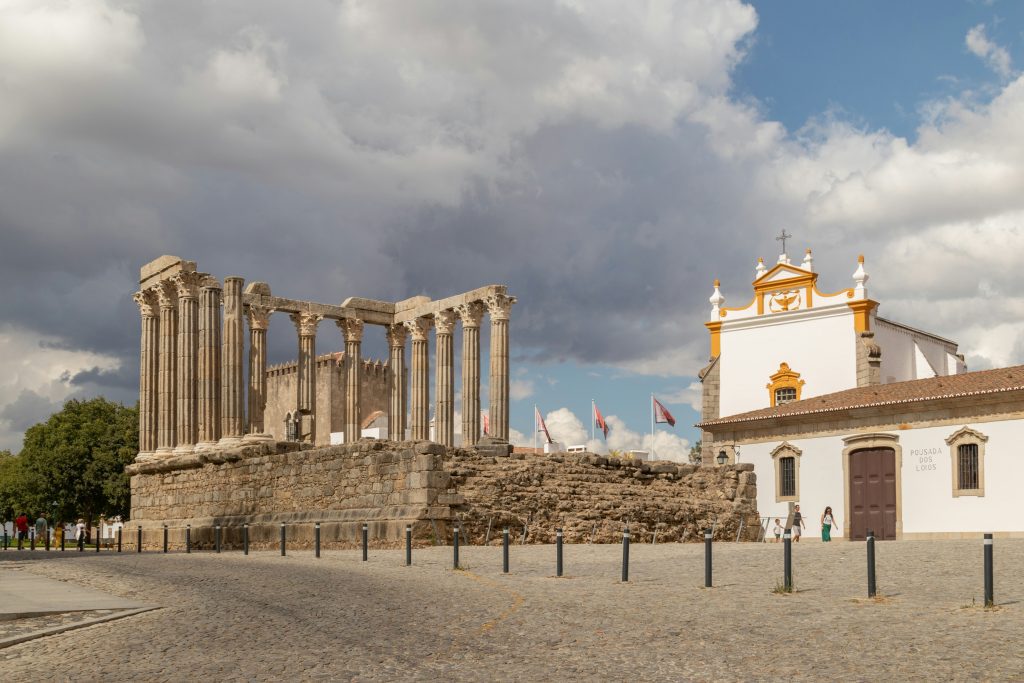
Portugal is known for its medieval castles, picturesque villages, and stunning coastline, but it also preserves remarkable traces of the Roman Empire.
From ancient thermal baths and archaeological settlements to some of the best-preserved Roman cities in the Iberian Peninsula, these sites offer a fascinating glimpse into life nearly 2,000 years ago.
Whether you’re a history enthusiast, archaeology lover, or simply looking for unique places to visit, these must-see Roman ruins in Portugal showcase the country’s rich Roman heritage and enduring cultural legacy.
Table of Contents
Our List of Top Roman Ruins in Portugal
Roman Ruins of Conímbriga, in Condeixa-a-Velha (Coimbra)
Conímbriga has been inhabited since prehistoric times. It was occupied by Roman troops in 139 BC, after which it became the prosperous capital of Lusitania (an ancient province covering a big part of Portugal).
The majority of the constructions date back to the time of Emperor Augustus (27 BC – 14 AD).
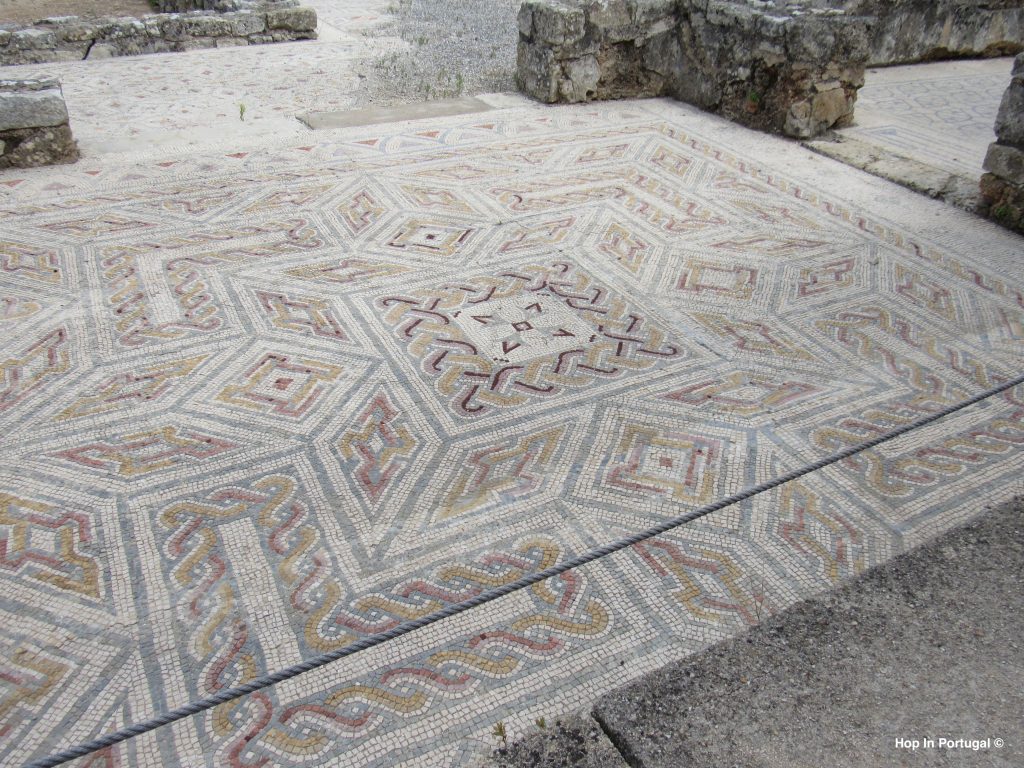
Throughout the houses of important aristocratic Romans of the time, you ‘ll notice beautiful mosaics.
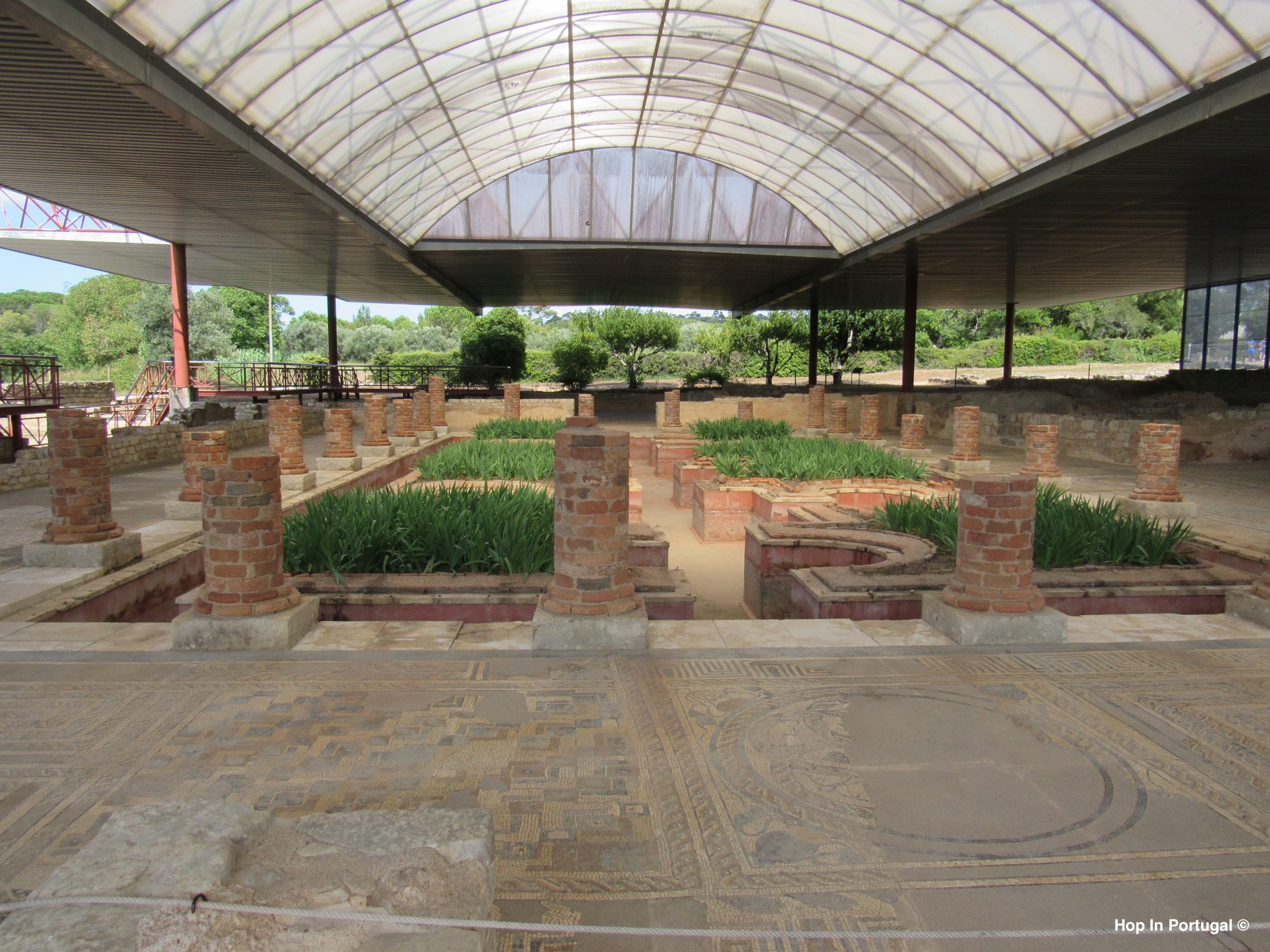
Casa dos Repuxos seen above is one of the highlights. An impressive aristocratic residence with carefully placed mosaics and an original hydraulics infrastructure with water jets. They usually function for visitors to see. Refresh yourself during the Summer and discover the stories told by each of the mosaics!
However, Casa dos Repuxos is not the biggest private building in Conímbriga… The biggest one is the Casa de Cantaber with about 3300 m2 (≃35521sqfeet) and a vast peristyle (courtyard surrounded by a row of columns called collonade).
The museum collection includes archaeological materials collected in Conímbriga, including several vases, plates and other interesting objects. Also, there is evidence of Suevo-Visigothic presence in the town.
To visit the Roman ruins in Conímbriga and the museum you’ll need to buy tickets. Check all the information here. By the way, they are quite strict on closing time. According to the online website, the ticket office closes at 5:15 PM, but the earlier you get there the better, so you don’t need to rush your visit. And there is quite a lot to see outside and inside the museum!
Curious fact: Conímbriga is near Coimbra. Why not visit the cryptoporticus? The cryptoporticus was built in the mid-1st century to support the forum: the civic and religious center of the city of Coimbra. Due to its size and location, it would have been an imposing feature of the urban landscape of the city of Aeminium (Roman Coimbra) at the time. See here how to visit it.
Roman Thermae of Maximinus
Bracara Augusta was the name of the city of Braga at the time its baths were located in the most important area of the city: the forum. During this Flavian period, Bracara Augusta was renewed with a thermal complex on the hill of Maximinos, along with an adjoining theatre. And there’s still more being excavated!
The Roman Thermae or Roman Public Baths of Braga are classified as a National Monument and were built at the beginning of the 2nd century AD, on top of a pre-existing building.
To this date, these are the only existing Roman public baths found in Braga. The building was found in 1977.
Usually, every thermal complex had a Apodyderium (where romans would change their clothes), Natatio (the cold water pool), Palaestra (gymnasium) or instead of this last one they would go to the Frigadirium (cold compartment) and then to the Tepidarium (lukewarm section). Lastly, the final stage would be the Caldearium (hot compartment), whose rooms were heated with a Praefurnium (furnace).
The hot rooms were heated using a system of hollow under floor chambers and the hot air was produced by furnaces. The hot air circulated around the walls, with the help of tubes or hollow bricks, to heat some of the rooms, a testament to the ingenuity and advanced engineering of the Romans.
Take a peak at some images of the ruins and learn a little bit about the Roman public baths.
Roman Ruins of Milreu, Estói (Faro)
The Estoi Palace from the 18th century is not the only historical attraction in the area of Estói. You’ll find an impressive archeological site: the Milreu Roman Ruins.
The Roman occupation began in the 1st century AD and left its mark in Portugal including Estói. During the 2nd and 3rd centuries, Milreu grew into a luxurious Roman Villa with an excellent water supply for the property. Today, you can observe the mosaics and marble remains.
Archaeological excavations carried out at the end of the 19th century uncovered mosaics with predominantly marine themes, various marbles and ceramics, as well as painted sculptures that adorned the interiors and gardens.
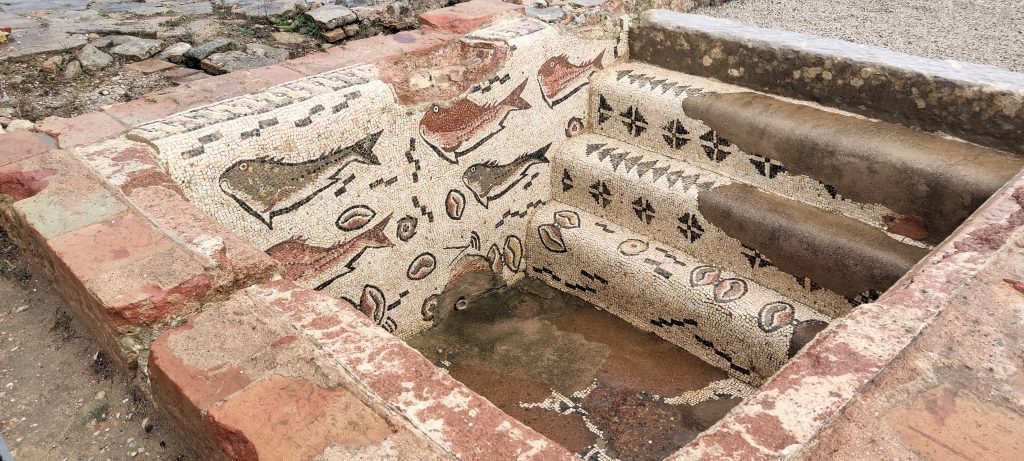
In the case of the Milreu Bath Ruins, there are 4 main areas: apodyterium, frigidarium, the tepidarium and caldarium.
Above you can observe some fish mosaics in the Frigadarium pool. The carefully placed squares showcase the artistry and complexity of the work involved in creating these beautiful images.
Apart from the thermal baths, there were olive oil and wine presses, and agricultural facilities, confirming the lifestyle of a family with high social and political status. It also includes a temple that was Christianized in the 6th century. Then, during the period of Islamic rule in the Iberian Peninsula, it was used as a cemetery.
According to this website, the last entry to visit the archaeological site is 30 minutes before closing.
⚠️The Roman Ruins of Milreu will be closed to the public until September for renovation of the interpretive center and improvements to visitor services. As soon as we have more info, we will share with you!
Tongobriga Archeological site of Freixo
In Tongobriga, you will find pre-roman and roman ruins. The first excavations identified residential areas from the Castro Culture/Castreja and Roman periods. Some of the constructions include pre-Roman baths, a Roman forum, Roman thermal baths and a necropolis, attesting to the importance of Tongobriga, which rose to the status of civitas at the time.
One of the highlights is the Casa do Impluvium, or home of the impluvium. The impluvium is a shallow tank that collects rainwater in the center of an open courtyard. The tank is in excellent condition and is entirely lined with granite slabs, which is a unique feature.
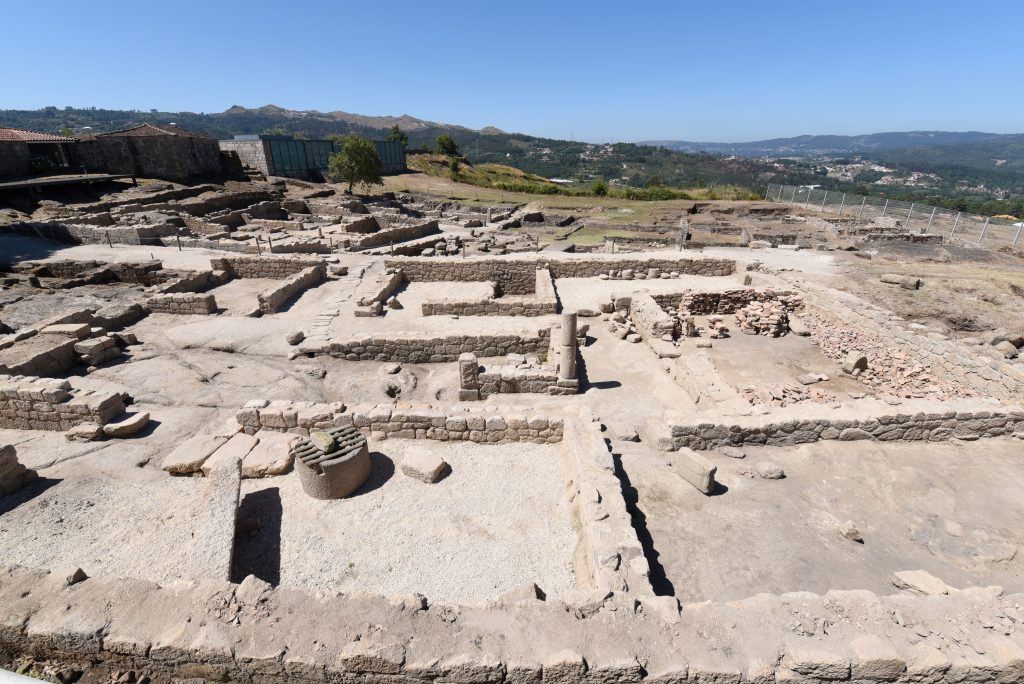
For a long time, it was believed that Tongobriga was founded during the reign of Emperor Augustus (27 B.C.–A.D. 14). As such, it would have been established in the final years before the start of the Christian era. In fact, earlier remains are very scarce and barely visible.
However, new excavations found evidence of a sedentary occupation at the base of the settlement’s southern slope dating back to at least the Bronze Age, around the 15th century BC.
This does not mean, however, that we can conclude there was a continuous settlement between that period and the establishment of the fortified settlement that, during the Iron Age, came to be known as Tongobriga. Nevertheless, there is a growing body of archaeological evidence suggesting that a hillfort settlement was founded well before the time of Augustus.
Curious? To visit the archaeological site, you should know there are 3 sections:
- Ruins of Tongobriga
The traditional circuit, centered around the pre-roman and roman ruins of Tongobriga (1st century BC to 6th century AD) can be visited for a small price of 2 euros. An extra euro if you want to see the interpretative center. Seniors get a discount and children up to 12 years old (accompanied by an adult) don’t pay.
- Fair of Quaresma
There’s a special circuit around the main spaces and buildings of an ancient fair called “Feira da Quaresma”. A fair that probably originated during the Roman Era as a celebration of the Spring Equinox. The visit starts at the site of the original market and the Chapel of Nossa Senhora A Velha, and ends in the center of the village, where all the infrastructure of the Fair is located (reborned during the Counter-Reformation period and remained there until it ended in 1905).
- O Freixo and the French Invasions
This is another circuit, but focused on the French invasions (early 19th century AD), with two invigorating walks: either along the PR6 trail toward Covas, where António de Serpa Pinto was born, or along the so-called “Caminho de Santa Mafalda” trail toward the site of the old Canaveses Bridge, whose defense brought fame to the captain who was born and lived in Freixo.
For more information on the Tongobriga ruins, see here.
Termas de Chaves
Finally, we have the Thermal Bath Ruins of Chaves. This archaeological site is not as grand as the others, but it has 2000 years of history and is located in the beautiful city of Chaves. The name Chaves, just like the city of Braga, has a Roman origin.
Chaves was the Roman city of Aquae Flaviae, founded in 79 AD.The term Aquae referred to the abundant hot springs in the area, while Flaviae honored Emperor Vespasian, whose family name was Flavius. Over time, the word Flaviae eventually became Chaves. One obvious Roman presence is the incredible roman bridge over the river Tâmega.
Chaves was a vital socioeconomic and therapeutic stop along the Roman Via XVII between Braga and Astorga. Recent archaeological excavations uncovered the remarkable remains of the city’s Roman medicinal baths, revealing a complex with several construction phases. In other words, this was a therapeutic bath complex, different from the baths for hygiene which were common in Roman cities.
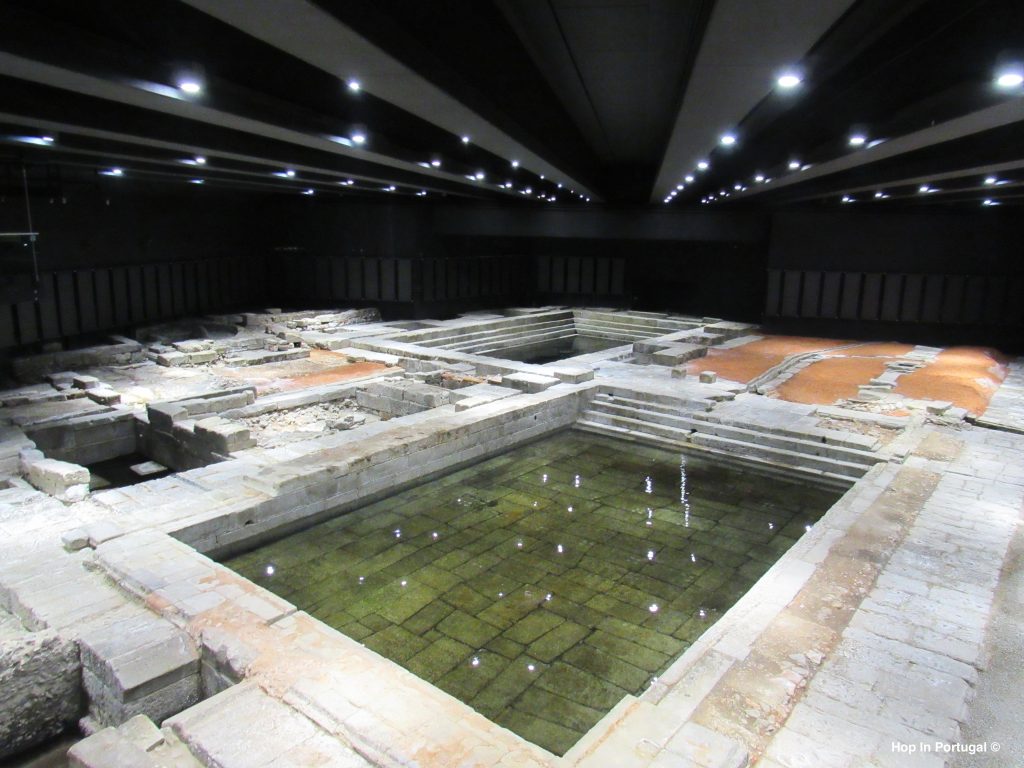
Acquae Flaviae was an important healing spa with various treatments, different pools, and water circulation system. There was also a religious aspect, represent by the Nymphaeum, located next to the thermal complex, a small independent monument dedicated to the Nymphs. It was used as a prayer for healing and a request for permission to use the water, a natural and divine resource.
Today, these ruins are protected within an interior exhibition space, allowing visitors to explore the ancient thermal heritage of Chaves in a comfortable, well-preserved environment that connects modern visitors to the Roman world!
Explore the interior in a 360 virtual visit right here! See the opening hours here to visit in person and discover the unique finds in Acquae Flaviae (turn on the english translation on the top right button).
Tips to visit Roman Ruins in Portugal
- Visit Early: Many archaeological sights have limited shade. It can be hot during the summer months. There, arriving early will help you avoid the hottest temperatures and busiest crowds.
- Wear comfortable shoes: Roman Ruins often cover large areas with uneven terrain and stone pathways, So, wearing comfortable footwear will make exploring much more enjoyable.
- Bring water and sun protection: Bring the basic sun protection (hat, sunscreen, sunglasses…). Most roman ruins aren’t inside a building (exception is the Termas de Chaves). A reusable bottle of water might also be handy when exploring in warm temperatures.
- Check opening hours in advance: Opening times and guided tours can vary throughout the year. It’s worth checking official websites before your visits. Some places may close at a certain time, but the last entrance to visit the ruins or the museum is at another time. See those details beforehand.
- Allow time for the museums: Many Roman archaeological sites include good museums with artifacts, mosaics, and interactive exhibits that provide valuable context for the ruins. Plan extra time to fully appreciate the history behind what you’re seeing.
- Combine your visit with nearby attractions: Many Roman sites are located near charming towns, historic centers, and other Roman attractions. For example, in Chaves there is a Roman bridge still standing!
Portugal’s Roman ruins offer a fascinating journey through nearly two millennia of history. Whether you’re exploring ancient mosaics, thermal baths, or archaeological settlements, these sites reveal the lasting influence of Rome and provide a unique perspective on Portugal’s rich cultural past.
There’s a lot more history to discover in Portugal!