Celebrate April 25 in Portugal with a look at the historic Carnation Revolution, powerful songs, and the best 2026 events and concerts in Porto and Lisbon.
Table of Contents
What happened on April 25 in Portugal
April 25 is one of the most important dates in Portuguese history… On April 25, 1974, a revolution brought down a 48-year period of authoritarian rule (military dictatorship from 1926-1933, followed by Estado Novo dictatorship from 1933-1974).
It all started with a military coup organized by captains who were mostly young officers, increasingly unhappy with the long and costly Portuguese Colonial War in Africa. They were also frustrated with the rigid, authoritarian regime of the Estado Novo (name of the government at the time).
The regime was led at the time by Marcelo Caetano (successor to António de Oliveira Salazar, the first dictator of Estado Novo). He had been in power for approximately 6 years.
What makes the events of April 25 in Portugal particularly remarkable is how quickly a carefully planned military operation transformed into a nationwide political revolution with very limited bloodshed (4 civilians were killed by DGS, secret police, gunfire).
The coup was created by the Armed Forces Movement (MFA), formed by captains, and it was designed to remove the Estado Novo regime, but not necessarily to rely on mass civilian participation. However, what followed far exceeded the original plan and reshaped Portuguese history.
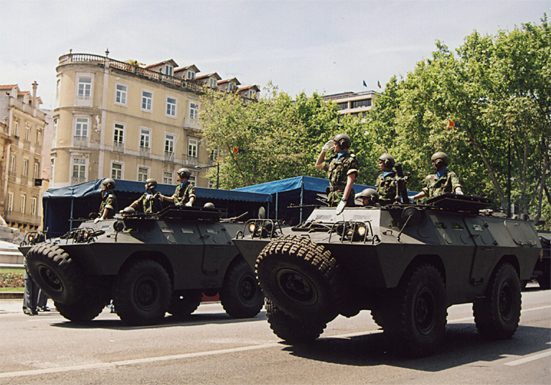
In the early hours of the morning of April 25th 1974, rebel military units began occupying strategic locations across Lisbon, including radio stations, television station, airports, and government buildings. One of the most symbolic moments occurred when the song Grândola, Vila Morena was broadcasted on the radio, serving as a pre-arranged signal confirming that the revolution was underway.
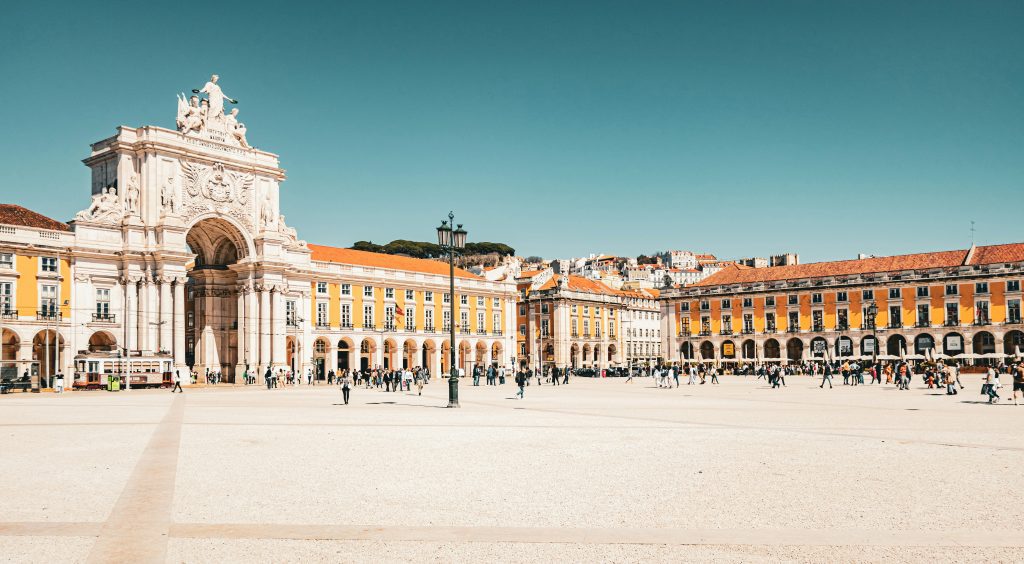
As the day progressed, the military operations in Lisbon and other cities moved forward. One of the key operations was the occupation of Terreiro do Paço/Praça do Comércio.
The military unit from the School of Cavalry (Escola Prática de Cavalaria) in Santarém, commanded by Captain Salgueiro Maia reached Terreiro do Paço and occupied it around 5:45 AM. Both Captain Salgueiro Maia and Major Otelo Saraiva de Carvalho were key elements to the revolution. The major directed operations from the command post in Pontinha.
Around 6 AM, troops surrounded the ministries, Lisbon City Hall, the Civil Government (entrances), the Bank of Portugal, Marconi Radio, and other strategic points in downtown Lisbon, isolating that area.
The resistance from the regime’s forces was limited but tense. Some loyalist units remained inside key buildings, including headquarters of the secret police DGS (originally called PIDE), which briefly resisted before surrendering.
One of the defining images of the Carnation Revolution of April 25 in Portugal is that of soldiers with red carnations placed in their rifle barrels by civilians.
During the revolution, civilians – especially flower sellers and a woman named Celeste Caeiro – handed out red carnations to soldiers, who placed them in their rifles. This spontaneous act turned the flower into a symbol of peace.
Celeste Caeiro was working in a restaurant when her boss told everyone to go home because of the revolution. He told her to take home the red carnations, that were going to be given to customers to celebrate the restaurant’s anniversary. When a soldier asked her for a cigarette, she gave him a carnation instead.
Songs related to the Carnation Revolution
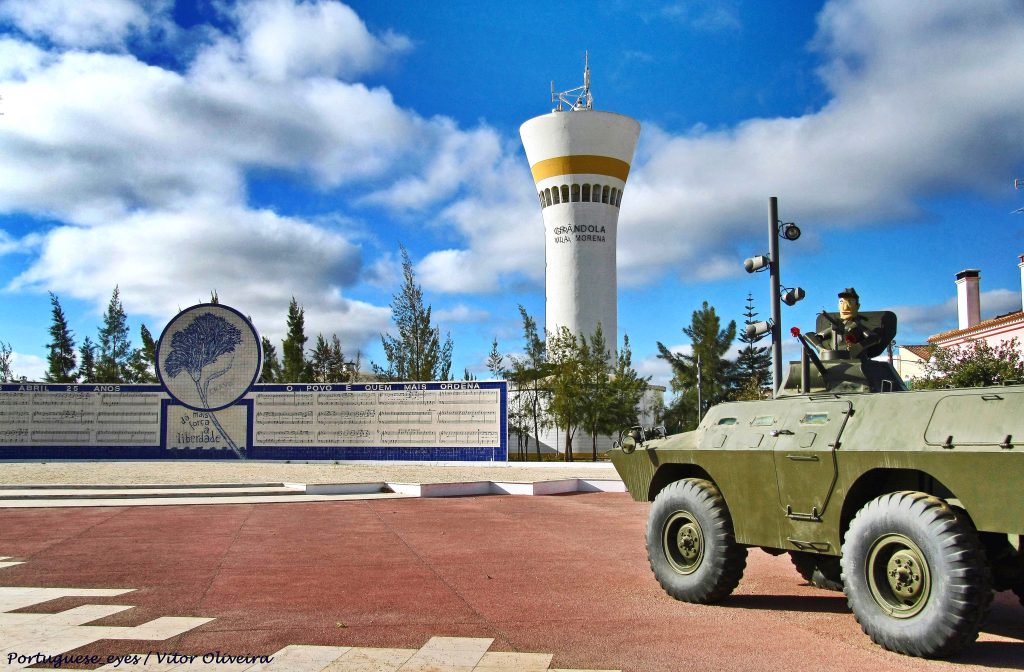
- E depois do Adeus: This was the first signal (at 10:55PM). The code meant that, up to that point, nothing stood in the way of the operation’s progress across the country. It was broadcast by Emissores Associados de Lisboa.
- Grândola Vila Morena: Then, shortly after midnight (12:20AM), a song by Zeca Afonso was broadcast in Radio Renascença. The Grândola Vila Morena song was a signal to proceed with the Operation End of Regime. For the first time, contacts would no longer be made in secret.
Consequences of April 25 Revolution in Portugal
In the months that followed, Portugal entered a complex transitional period (1974 -1976) known as the PREC (Processo Revolucionário Em Curso), characterized by political instability, rapid reforms, and competing visions for the country’s future.
The first free democratic elections in Portugal were held on April 25, 1975, exactly one year after the Carnation Revolution, to elect the Constituent Assembly. The election marked the transition to democracy, with a victory for the Socialist Party (PS), followed by the PPD and the PCP.
Beyond Portugal’s borders, one of the most significant outcomes was the decolonization of Portuguese territories in Africa, including Angola, Mozambique, Guinea-Bissau, Cape Verde, and São Tomé and Príncipe.
The Carnation Revolution continues to be studied worldwide as rare example of a near-bloodless transition from dictatorship to democracy driven by both military coordination and popular support.
Despite tensions and the initial political instability, the revolution ultimately paved the way for the establishment of a democratic system, culminating in the adoption of a new constitution in 1976.

Events & Concerts on April 25 in Portugal (2026) 🎶
Porto
On the 52nd anniversary of the Carnation Revolution, the city of Porto is celebrating the occasion under the slogan For April. For the Constitution. For Peace. With Dignity. With a Future.
Expect concerts at night on the 24th and 25th in some areas of Porto. It will be mainly Portuguese songs related to the Freedom theme. The singer Carlão is the highlight, at around 10PM (on the 24th, Avenida dos Aliados).
Expect fireworks at midnight, marking the start of April 25 with light and hope.
In the morning (around 10 AM), the little ones get the day started with traditional games in the Humberto Delgado Square.
In the afternoon (around 2:30 PM), there is a tribute to the anti-fascist resistance fighters with a parade from Largo de Soares dos Reis towards Avenida dos Aliados. The iconic Freedom Parade takes over the streets once again.
Avenida dos Aliados and downtown Porto are the main locations of these festivities.
Lisbon
In Lisbon, there will also be an April 25 Parade around 3 PM, from the Praça do Marquês do Pombal, passing by the Avenida da Liberdade to the Rossio area.
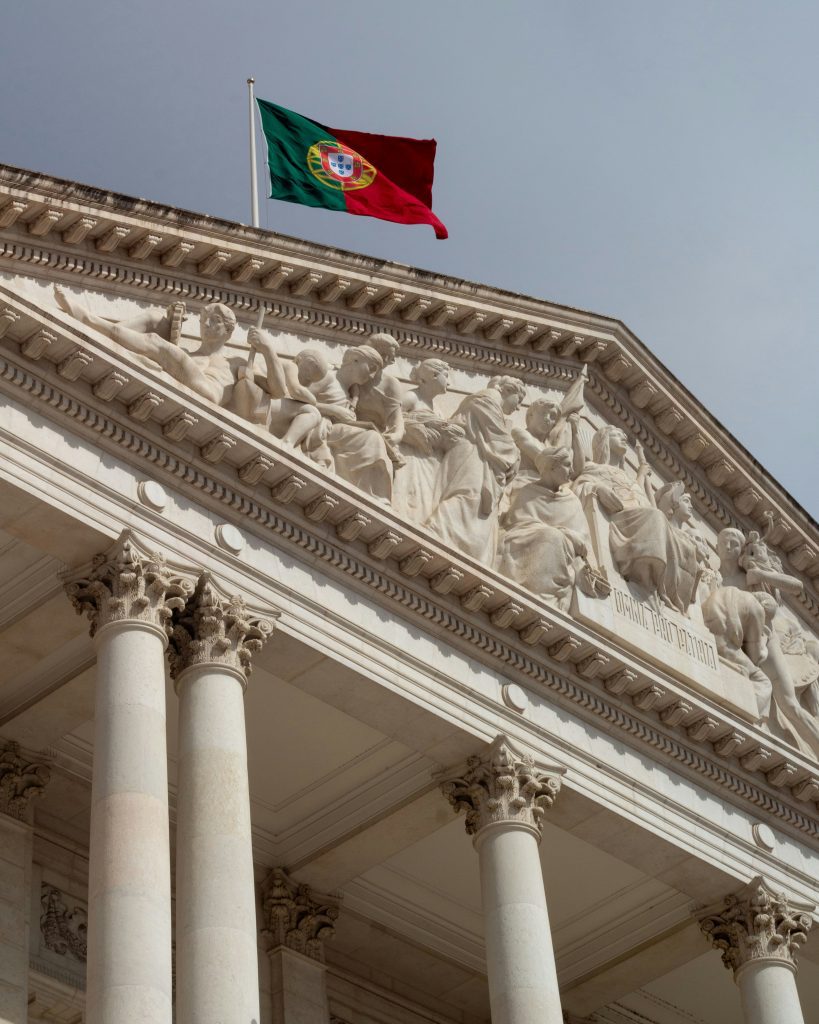
The São Bento Palace opens its doors to the public for free guided tours, offering a chance to explore the heart of Portuguese democracy. This building has a long and rich history.
It was first a 16th-century monastery, then turned into a neoclassical palace, and finally transformed into the Portuguese parliament. On this special day, there are free visits to the parliament from 2:30 PM to 7:00 PM (last entry at 6:30PM).
The gardens of the Palace of Belém, official residence of the President of Portugal, will also be open to visitors around 1:30 PM for a special program with music.
If you’d like to know more about April 25 in Portugal and the revolution, there are some books and movies available in English or English subtitles, from Portuguese and foreign authors.
Have a good weekend!
Learn more about the history of Portugal.